Seasons of Life and Design

In Virginia, autumn has finally arrived, my favorite season. As I go on my daily walks, I can’t help but notice how naturally we adjust to each season. Our schedules shift, our wardrobes change, even our bodies respond differently.

Similarly, the seasons of life bring their own transformations, in how we live, rest, work, and entertain. And just as we adapt to nature’s rhythm, our homes evolve with us.

In one season, we may live in a small apartment or condo, just starting out. Our needs are simple and deeply personal, our surroundings only need to reflect us.

In another, life expands to include a partner, and design becomes a collaboration,  a shared expression of two people’s tastes and rhythms. Then come the seasons filled with little ones, where design becomes all about them: safety, joy, and creating a home that supports the beautiful chaos of family life.

Eventually, there comes a quieter, more reflective season, one where the children have flown, and home becomes a space for yourself once again. Comfort, safety, health, and connection take center stage, as you design a space that nurtures your well-being while welcoming those who come and go.

Each of these seasons calls for a different approach to design,  thoughtful adjustments that support the lifestyle, priorities, and emotions of the moment. But through them all, one thing remains constant: the need for grounding comfort, a sense of peace, and that unmistakable feeling of coming home.

So, tell me ….which season of life are you in?

How Interior Design Supports Mental Health for Busy NOVA Families

In Northern Virginia, life moves fast. Between demanding careers, long commutes, and kids with packed extracurricular schedules, many families find themselves running on empty. The home, ideally a place to rest and recharge, often becomes just another source of stress — cluttered, chaotic, and hard to maintain. But what if your home could actually support your mental health instead of adding to the pressure? That’s where thoughtful interior design comes in.

Dual-Income Families and the Time Crunch

A large share of NOVA families consist of couples where both partners work full- time. On top of that, children today are often involved in multiple activities, filling evenings and weekends with carpools, practices, and events. Many parents also feel pressure to maintain a certain lifestyle or keep their homes “put together,” reflecting the region’s high professional and social expectations.

All of this can make the home feel like just another task rather than a sanctuary. Parents often have little energy or bandwidth to create spaces that truly support their well-being.

How Interior Design Can Help

Thoughtful interior design goes beyond aesthetics — it actively reduces stress and supports mental health. For busy NOVA families, that might include:

  • Functional layouts that simplify daily routines.
  • Clutter-free organization with built-in storage, drop zones, and easy-to-maintain systems.
  • Calming environments with intentional color palettes, lighting, and textures.
  • Spaces that foster connection, like cozy family rooms or multipurpose dining areas.
  • Support for independence, such as homework nooks or organized storage for children.

And no — we’re not talking about turning your home into a Zen spa retreat (unless that’s your goal). It’s about creating a grounded, organized, and livable environment so families don’t get lost in the chaos of daily life.

Why Mental Health and Design Belong Together

Our surroundings directly impact our emotions and stress levels. Clutter, poor lighting, and disorganized spaces can increase overwhelm, while thoughtful design encourages calmness, focus, and connection. For Northern Virginia families juggling careers, children, and social expectations, a home that supports mental well-being isn’t a luxury — it’s essential.

The Raja Interiors Approach

At Raja Interiors, we focus on homes that support real-life family needs. For households where both parents work full-time, kids have packed schedules, and social pressures run high, we create spaces that restore balance. Through intentional design that prioritizes function, organization, and comfort, we help families enjoy homes that feel calm, inviting, and easy to maintain. The result isn’t a “Zen spa retreat” (unless you want it to be), but a home that’s grounded, livable, and supportive of mental health and family life.

Closing Thought

Interior design is more than appearances — it shapes how a home makes you feel. Done intentionally, it reduces stress, fosters connection, and brings joy back into everyday living. For busy NOVA families, that transformation can make all the difference.

See you next time.

A Home Designed for Multigenerational Living

More and more families are embracing multigenerational living—a household where parents, in-laws, kids, and even adult children share one home. For many cultures, this isn’t just practical, it’s a way of life. Elderly parents are cared for at home rather than in facilities, children benefit from built-in family support, and the home becomes a central hub for love, connection, and tradition.

But how do you design a home that works for everyone—from toddlers to grandparents—without sacrificing comfort, privacy, or style? Let’s break it down.

Designing for Parents and In-Laws

In many families, parents or in-laws live with their adult children—sometimes to help with childcare, other times simply because nursing homes aren’t culturally preferred. This makes thoughtful design a necessity.

Whenever possible, I recommend creating a main-level bedroom with a full bath. Even if your parents are still mobile now, planning ahead for the future is key—especially if this is your forever home. Consider features like:

  • A roll-in shower for accessibility
  • Non-slip flooring for safety
  • A bed that’s not too high for easy use
  • Ample lighting for both comfort and safety
  • A small lounge area or TV corner for personal downtime
  • Incorporating beloved furniture pieces or heirlooms, such as a favorite chair, dresser, or family keepsakes, so they feel connected to their history and memories within the home

This kind of setup ensures your parents don’t just feel like they’re “living with someone,” but instead have a space of their own that supports their dignity, independence, and mental wellbeing.

Designing for Kids

Kids have busy, multi-layered lives—school, sports, friends, online religion classes, and hobbies. Their spaces need to keep up with it all.

I love creating multifunctional zones for children that balance fun, practicality, and privacy, such as:

  • Reading nooks for downtime
  • Homework stations with good lighting
  • Ample storage for toys, gear, and books
  • Personalized décor that makes the space feel like theirs

The goal? A home that supports their routines while still giving them room to play, grow, and relax.

Designing for Adult Children

More adult kids are living at home after college—sometimes to save money, other times because culturally, moving out at 18 just isn’t the norm. This can be tricky because privacy is everything for this group.

When possible, I design these spaces to feel like mini-apartments within the home. Think:

  • Loft or studio-style layouts
  • Separate entrance (if possible)
  • A private bathroom
  • Workspace for remote jobs or study
  • Mini fridge, coffee/espresso station, or kitchenette touches

These details give them the independence they crave while still keeping them connected to family life.

Designing for Long-Term Guests

In multigenerational households, guests don’t always stay for just a night or two. Whether it’s an aunt visiting from abroad, cousins in town for weeks, or a family friend needing a longer stay, a well-prepared guest space is essential.
If you don’t have a dedicated guest room, I recommend designing a “four-season guest room”—a flexible space that can easily transform when needed. Stock it with:

  • Fresh linens and extra bedding
  • Seasonal essentials (blankets for winter, light throws for summer)
  • Storage options for clothes and luggage
  • A desk or small table for personal use

This makes guests feel welcome and comfortable no matter how long they stay.

The Bottom Line

Designing for multigenerational living takes more than just adding bedrooms. It’s about balancing privacy and connection, planning for the future, and honoring the cultural values that make families thrive together.
Whether you’re building a new home or renovating your current one, strategic design can make all the difference. Even smaller homes can be carefully planned to meet the needs of parents, kids, adult children, and guests.
At Raja Interiors, we, specialize in creating spaces that bring harmony, comfort, and beauty to multigenerational households. Because when everyone feels at home, that’s when a house truly becomes a home.

Ready to design your home for multigenerational living? Let’s chat about how we can make your vision a reality.

See you next time.

What Does a Culturally Enriched American Home Look Like?

What does a culturally enriched American home really look like? It’s not just about pretty furniture or modern trends—it’s about you. Your roots, your heritage, your faith, your family. And the magic happens when all of that blends seamlessly with modern American living.

I get this question all the time: “I was born and raised in the U.S., but my roots are from India.” Or, “My parents migrated from Pakistan when I was a child, but I grew up in Virginia. I want my home to look modern, but I also want it to reflect my heritage—without feeling overwhelming.”

Sound familiar?

These are exactly the kinds of conversations I have with my clients during design consultations. So, what does American living look like when culture, heritage, and modern design need to live under one roof?

For me, it always starts with one thing: listening.

Listening Beyond the Walls

Every culturally enriched home design begins with understanding lifestyle. When I sit with a client, I want to know what’s truly important to them:

  • Is it faith and religion?
  • Family ancestry and heirlooms?
  • Cooking and eating habits?
  • How kids live and play?
  • Or how parents or in-laws fit into the home dynamic?

Design isn’t just about furniture and finishes—it’s about real life.

For example:

  • If a family cooks two to three meals a day, do they need a dirty kitchen? Or do they need countertops that won’t stain from turmeric and spices?
  • If prayer is essential, do we design a dedicated Namaz room or Mandir? Should it face a certain direction? Should it be open to the family or tucked away for privacy?
  • In some religions, displaying family photos isn’t allowed. So what kind of meaningful art fills those walls instead?
  • Many cultures don’t allow shoes inside the home. That means thoughtful drop zones, built-ins, and shoe storage become essential—not just an afterthought.

And then there are the kids: they’re balancing Quran classes online, Netflix, gaming, and sports. They need quiet study zones, but also spaces to relax and have fun. A culturally enriched American home works for every generation living under one roof.

The Stories That Live in the Details

One of my favorite parts of cultural interior design is weaving heritage into modern spaces. Sometimes it’s through antiques and heirlooms—art, fabrics, furniture—that clients already own. And sometimes, it’s about creating those connections from scratch.

Take this story: one client didn’t have heirlooms but still wanted her space to reflect her heritage. We had custom art made of landmarks from her family’s ancestral city. Installed in a long hallway with molding and art lighting, it became an instant conversation starter.

Another time, I stumbled on hand-sketched drawings of a small town in Virginia at a thrift shop. I saved them, thinking, “Someday, I’ll use these.” Later, while working on a lake house, I hung them in a bedroom—only to discover they were sketches of the exact neighborhood the homeowner grew up in. Imagine their joy at that connection!

In another project, a client who had recently lost her father found a piece of art he had made for her in college. We reframed it beautifully and placed it near her kitchen—the heart of her home—so she could see it every day. That piece wasn’t just décor. It was memory, love, and heritage woven into her daily life.

Designing Sacred Spaces

Faith often plays a powerful role in home design. For one Hindu family, we transformed two storage closets into an open hallway Mandir—complete with tile, jaali screens, niches, and a raised platform. It became a sacred yet accessible space for every family member.

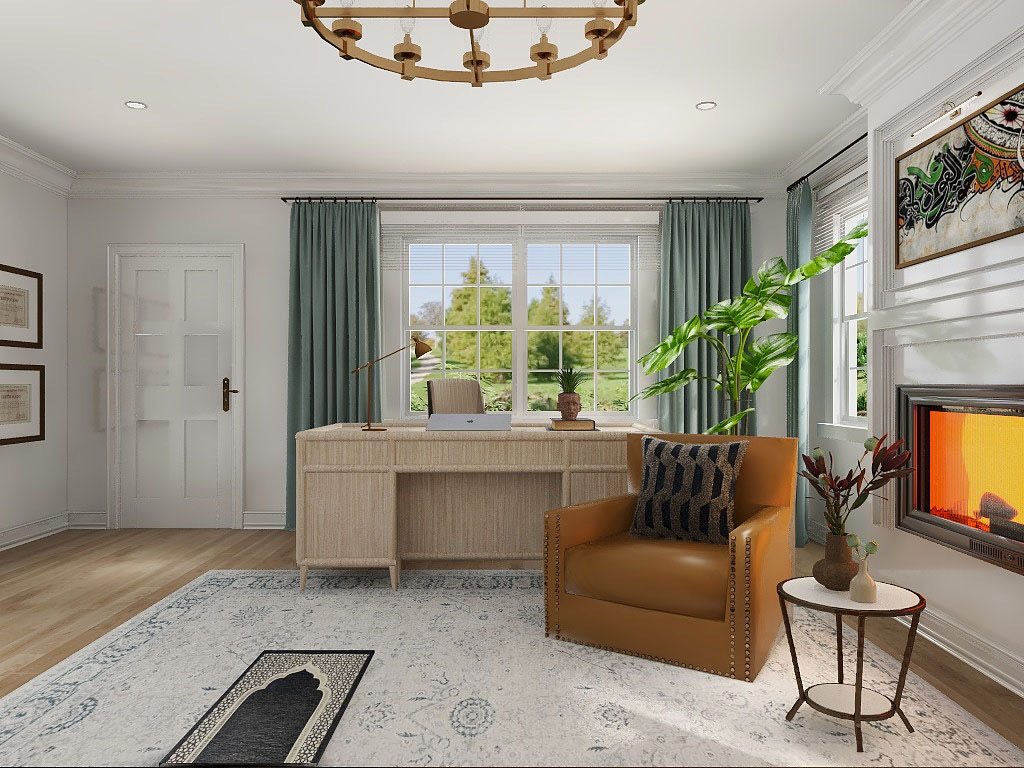
For a Muslim family, a Namaz room couldn’t include human images on the walls. To create meaning and beauty, we designed a gallery wall of framed Islamic calligraphy. It not only set the spiritual tone of the room but also added stunning visual impact.

This is the beauty of faith-based interior design: it’s functional, spiritual, and personal all at once.

The Bottom Line: Blending Heritage with Modern Living

Here’s what I’ve learned: culture and heritage don’t need to compete with modern design—they can live beautifully together. No matter your background, faith, or traditions, there’s always a way to infuse your story into your home—subtly, elegantly, and authentically.

Because at the end of the day, a culturally enriched American home isn’t about flags, statues, or themed décor. It’s about creating spaces where your modern life and your heritage walk hand in hand.

Ready to Design Your Own Culturally Enriched American Home?

Your home should tell your story—and I’d love to help you design it. At Raja Interiors, we specialize in blending modern American living with cultural heritage, faith, and lifestyle.

If you’re ready to create a home that feels modern, functional, and uniquely yours while honoring your heritage, let’s chat. Reach out today and let’s bring your vision to life.

See you next time.